

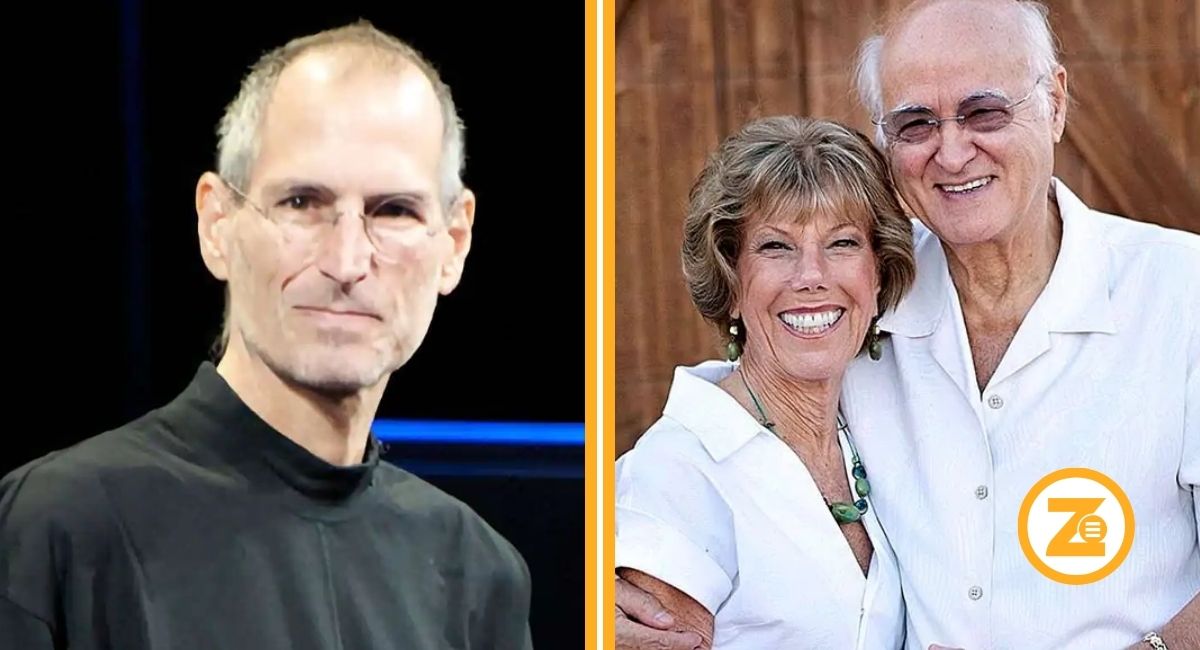
Before Steve Jobs became known for Apple, a young university student faced a decision about his future. Joanne Schieble was his birth mother, and her story includes much more than his adoption. She studied in Wisconsin, worked as a speech therapist, and brought up the novelist Mona Simpson. Years after placing her son for adoption, she met him again. Their reunion opened a new chapter for two people who had spent most of their lives apart.
Personal Details of Joanne Schieble
| Detail | Information |
|---|---|
| Name | Joanne Schieble |
| Fuller name used in published profiles | Joanne Carole Schieble |
| Also known as | Joanne Simpson |
| Birth | Milwaukee, Wisconsin, in 1931, according to daughter Mona Simpson |
| Nationality | American |
| Education | Graduate studies at the University of Wisconsin |
| Profession | Speech pathologist, also called a speech therapist |
| Known for | Being Steve Jobs’ biological mother |
| Children | Steve Jobs and Mona Simpson |
| First husband | Abdulfattah “John” Jandali |
| Later husband | George Simpson |
| Son’s adoptive parents | Paul and Clara Jobs |
Growing Up and Studying in Wisconsin
Joanne Schieble came from a Catholic home in Wisconsin. Biographer Walter Isaacson described her roots near Green Bay, where religious beliefs played a strong part in home life. Those beliefs later affected her relationship with the father of her children.
She went on to study at the University of Wisconsin. Accounts of Jobs’ adoption describe her as a graduate student, meaning she had continued her education after an initial university degree. Her own studies help explain the importance she later placed on education for her son. She wanted him to have access to college, even though she would not be the person bringing him up.
Meeting Abdulfattah Jandali and Facing Opposition
At university, she began a relationship with Abdulfattah Jandali, a Syrian student who also worked as a teaching assistant. He is often called John Jandali in English accounts. They came from different religious backgrounds, and her father strongly opposed their marriage. Isaacson explained that her father had also objected to earlier relationships with men outside their Catholic community.
Their situation became more difficult when she became pregnant. The couple were unmarried, and the opposition at home remained a serious problem. It would be unfair to describe the adoption as a simple decision without recognising that pressure. The available accounts show a young woman facing conflict between her relationship, her parents’ wishes, and her hopes for her child. They do not support the idea that the choice was easy.
Steve Jobs’ Birth and Adoption
Joanne Schieble travelled to San Francisco, where a doctor helped arrange a private adoption. Her son was born there on February 24, 1955. The baby would become Steven Paul Jobs after Paul and Clara Jobs adopted him. At the time, nobody involved could have known that he would later help build one of the world’s best-known technology companies.
Jobs described the adoption himself during his 2005 Stanford graduation speech. He said the original plan involved a lawyer and his wife, but that arrangement changed. Paul and Clara, who were waiting to adopt, were offered the baby boy. They welcomed him into their home.
Why Education Mattered So Much to Her
Her main request was that college graduates adopt her child. When she learned that Paul and Clara did not meet that condition, she hesitated to approve the final adoption papers. According to Jobs’ Stanford speech, she agreed after they promised that he would attend college. Her concern was about the opportunities he would have as he grew older.
Paul and Clara kept that promise by supporting his studies at Reed College in Oregon. Jobs later left his regular course, although he continued attending classes that interested him. His decision as an adult does not change what the original promise meant. Before she knew anything about his future career, his birth mother had tried to secure an education for him. That is one of the clearest details about her wishes.
Marriage and the Birth of Mona Simpson
After the adoption, Joanne Schieble and Jandali married. Their daughter, Mona, was born in 1957. Unlike her older brother, Mona grew up knowing their mother. The marriage later ended in divorce in 1962. A later marriage to George Simpson explains why both mother and daughter became known by the surname Simpson, which appears throughout accounts of Jobs’ adult life.
Mother and daughter eventually lived in Los Angeles. Mona described growing up with a single mother and limited money in her eulogy for Jobs. Their daily life was very different from the business success her brother later enjoyed. This part of the story matters because it follows what happened after the adoption. Her life continued through work, changing relationships, and the everyday task of bringing up a daughter.
Joanne Schieble and Her Work in Speech Therapy
Her professional work involved helping people communicate. In a 2024 interview with The Believer, Mona recalled her mother helping people speak again after strokes. She remembered work that required time, physical effort, and hope.
This work gives a fuller picture of a woman usually introduced through her connection to Apple’s co-founder. Helping someone express a thought or speak to a loved one can make a difference in ordinary life. Her daughter’s memory provides a specific example of the work she did.
Supporting a Daughter Who Wanted to Write
Mona also remembered a small but useful gift from her mother. In the same interview, she described living in an apartment with very little furniture. Her mother bought her a desk and a typewriter, and she began typing stories at night. The detail offers a direct look at how an interest could be supported even when money was limited.
Mona later studied at the University of California, Berkeley, and Columbia University before establishing herself as a novelist. Her writing followed its own path, separate from her brother’s work in technology. The desk and typewriter do not explain her whole career, but they show an act of support. For readers looking beyond the adoption story, this memory reveals a practical moment between a mother and her daughter.
How Steve Jobs Found His Birth Mother
By the middle of the 1980s, Jobs wanted to learn more about his biological roots. Isaacson explained that the search involved the doctor connected with his birth. A letter left by that doctor eventually supplied the information Jobs needed. With help, he located his birth mother in Los Angeles. Finding her took more than simply looking up a name.
The search also needs to be understood alongside his relationship with Paul and Clara. Jobs spoke of them as his parents and expressed strong love for them. Looking for information about his birth did not mean that their place in his life had disappeared. He could value the people who brought him up while also wanting answers about his origins. Both connections belong in an accurate account of his life.
An Emotional Reunion After Many Years
When Jobs finally met Joanne Schieble, the adoption was no longer just an event described in old records. Isaacson’s account presents their meeting as emotional. She expressed regret about giving him up, while he offered reassurance and gratitude. The child she had last known as a baby was now an adult with a life and career of his own.
Their meeting gave them a chance to speak about circumstances that had separated them for decades. It also brought Jobs news that he had a biological sister. This changed the meaning of his search: he had found more than an answer to a question about his birth. He had discovered another person with whom he could build a relationship. The reunion opened that possibility without erasing his childhood with Paul and Clara.
Bringing Steve Jobs and Mona Simpson Together
Through Joanne Schieble, Jobs learned about Mona, who was working and writing in New York. The siblings met as adults and became close. In her later eulogy, Mona remembered taking a long walk with him at their first meeting. She felt that he was someone she would have chosen as a friend.
Their bond continued for the rest of Jobs’ life. Mona’s account describes regular conversations and a brother who took an interest in the people he loved. Her memories add a personal side to a man often discussed through products and business decisions. Their mother’s connection to both children made the meeting possible, but the friendship that followed developed through their own time together and their interest in each other.
The Connection to Anywhere but Here
Readers may also find Joanne Schieble mentioned in discussions of Mona’s novel Anywhere but Here, published in 1986. The book follows a mother and daughter, and it draws on experiences connected with Mona’s life. Its journey from Wisconsin towards California is one reason readers connect its story with the author’s childhood and her relationship with her mother.
However, a novel should be treated as fiction. Writers can change events, combine experiences, and create dialogue that serves a story. A character’s words cannot automatically be presented as something a real person said. For factual details about her mother, interviews and personal essays provide firmer ground.
Public Information and Her Private Life
Public interest in Joanne Schieble often leads to questions about her later years, wealth, and personal circumstances. Reliable information does not answer all of those questions. Being connected to a wealthy son does not establish her own financial position. An estimate repeated across several websites is still an estimate unless it can be traced to evidence.
Dates also deserve care. The birth information in the profile above follows Mona’s own published account, rather than an unsupported date copied from another biography. Her mother’s life is best understood through details that can be checked: university studies, the adoption, professional work, motherhood, and the later reunion. Where the record is incomplete, leaving a question open gives readers a more honest picture than supplying a confident but uncertain answer.
Conclusion
Joanne Schieble was a university student, a speech therapist, and the mother of two children who followed very different careers. Her story includes pressure, separation, work, and a reunion that created new relationships. The adoption remains an important part of her life, but so do her years with Mona and her work helping others communicate. Together, these details offer a fuller view of the woman known as Steve Jobs’ mother.
(FAQ’s)
1. Who was Steve Jobs’ biological mother?
His birth mother was the Wisconsin graduate student later known as Joanne Simpson.
2. Why was Steve Jobs placed for adoption?
His unmarried birth parents faced strong opposition to their relationship, and his mother arranged an adoption.
3. Who was her daughter?
Her daughter is Mona Simpson, the American novelist who wrote Anywhere but Here.
4. What did she do for work?
She worked as a speech pathologist, including helping people speak again after strokes.
5. Did Steve Jobs meet his birth mother?
Yes, he found her as an adult, and their reunion also led him to meet Mona.
You may also read: James Daniel Sundquist: The Personal Journey and Legal Battle of Jimi Hendrix’s Son
Visit for more additional information: Zellow Magazine