

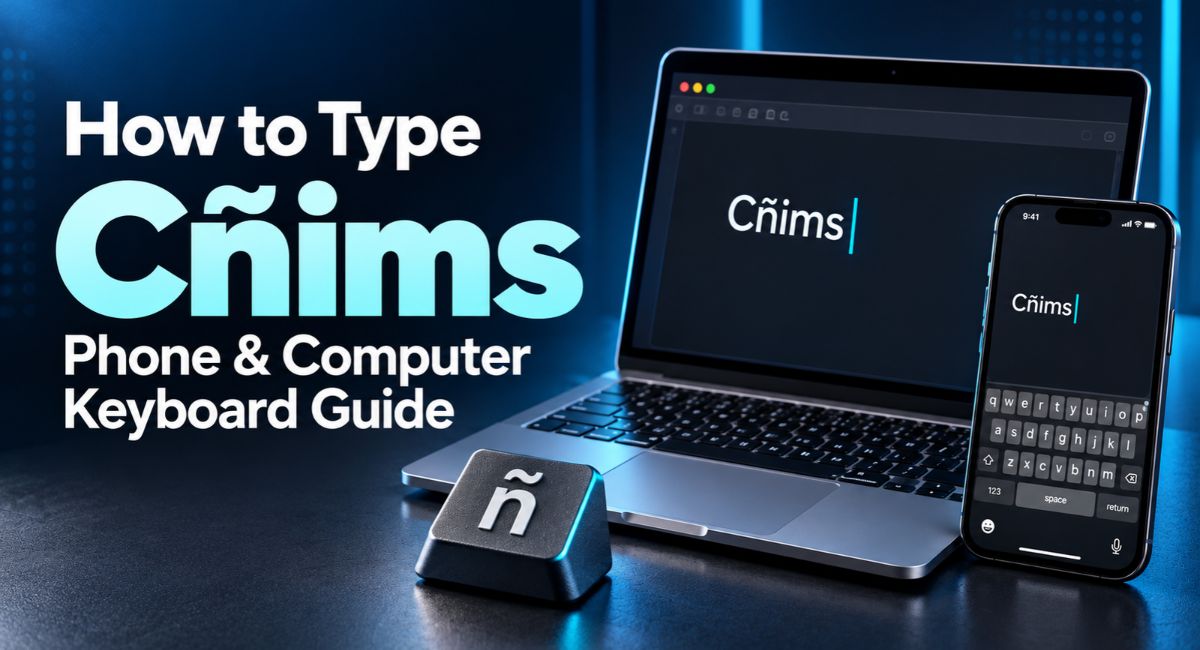
A single letter can make a simple word hard to type. You may know where every key is, yet still struggle to find the small mark above the n. If you want to write Cñims correctly, the main task is entering ñ while keeping the other letters in order. You can use a phone’s hidden character menu, a computer shortcut, or a copy saved in your notes. This guide explains the main methods and helps you choose one that suits your device.
Check the Correct Spelling Before You Start
The spelling Cñims begins with a capital C, followed by the lowercase letters ñ, i, m, and s. The second letter has a small curved mark above it, called a tilde. Keep that mark attached to the letter when you type. Writing a plain n leaves out part of the spelling, while placing a separate ~ beside it produces two separate characters. Look closely at your finished word before using it in a heading, message, or search.
Letter case matters when you want an exact copy. For the spelling shown here, only the first letter is capitalized. The uppercase form Ñ is different from the lowercase ñ you need. If Caps Lock is on, turn it off after entering the first letter. On a phone, check the Shift key before opening the hidden character menu. This small check can save you from correcting the whole word later.
Copy and Paste for the Fastest Result
If you only need the word once, copy this ready-to-use version: Cñims. On a phone, touch and hold the word, adjust the selection handles, and choose Copy. Open the place where you want to use it, touch and hold the text area, and choose Paste. On Windows, select the word and press Ctrl + C, then Ctrl + V. On a Mac, use Command + C and Command + V.
Select only the word, leaving out the space or punctuation beside it. After pasting, check that the curved mark is still visible and that no extra space has appeared inside the text. For a document with special styling, use the editor’s plain-text paste option if needed. You can also save a correct copy in a notes app. That gives you a quick starting point the next time you need the same spelling.
Type It on an iPhone
Open Notes, Messages, or another app where you can enter text. Type the capital C, then touch and hold the lowercase n key on the onscreen keyboard. Keep your finger down until the extra characters appear. Slide to ñ and lift your finger when that letter is selected. Type i, m, and s to finish Cñims. This method lets you enter the letter without leaving the app or copying from another page.
A quick tap enters a plain n, so give the hidden menu time to open. If you choose the wrong letter, delete it and try again before typing the remaining letters. Check that you are using a letter keyboard rather than the number or symbol screen. If your keyboard app does not offer the character, switch to a keyboard that supports it or use the copy-and-paste method above.
Find the Letter on an Android Keyboard
On an Android phone using Gboard, open a text field and type the first capital letter. Touch and hold n to look for its extra characters, then select ñ. Finish with the remaining lowercase letters and check the result. The touch-and-hold action is useful for entering letters that do not have their own visible keys. Different Android keyboard apps may arrange these choices differently, so look at the menu rather than guessing its position.
If you cannot find ñ in Gboard, open its Settings, choose Languages, and tap Add keyboard. Select Spanish, choose a suitable layout, and tap Done. You can switch between installed languages by touching and holding the space bar. Adding a keyboard language does not change the language of your whole phone. Once you have entered Cñims, switch back to your usual keyboard if that feels easier for the rest of your message.
Use an Alt Code on Windows
On many Windows desktop apps, you can enter ñ with Alt + 0241. First, turn on Num Lock if your number pad needs it. Type the capital C, hold the left Alt key, and enter 0241 using the numeric keypad. Release Alt after the final digit. The lowercase letter should appear, allowing you to add i, m, and s. Include the starting zero when using this particular code.
The number row above the letter keys does not replace the numeric keypad for this method. If the code does nothing on a compact laptop, check whether the keyboard actually has a working number pad. Avoid repeatedly trying the same shortcut with the top-row numbers. For typing Cñims on a laptop without a numeric keypad, Character Map or the Word method below is a more suitable choice. App support can also affect whether an Alt code works.
Use Character Map on a Windows Laptop
Character Map offers a way to find and copy special letters without remembering a number code. Open Windows search, type Character Map, and open the matching app. Choose a familiar font such as Arial, then look for the lowercase ñ in the character grid. Click it, choose Select, and then Copy. Return to your document, place the cursor after the first capital letter, and paste the character before adding the final three letters.
Use the larger character preview to check that you selected ñ rather than another marked letter. If the box holding your selected characters contains anything left from an earlier attempt, clear it before copying again. Otherwise, you may paste more than you intended. This method is especially useful when a physical keyboard has no number pad. You can also use it to check other unfamiliar letters before putting them into a document.
Use a Mac Keyboard Shortcut
On a Mac using the ABC keyboard layout, press Option + N to prepare the tilde, release both keys, and then press lowercase n. The two actions combine to enter ñ. To write Cñims, type the capital C first, use that sequence, and finish with i, m, and s. Do not keep Option held down for the final n. The accent is prepared first, and the letter follows it.
Another option is to press and hold n until the accent menu appears, then choose ñ. You can click the character or use the number shown beneath it. The menu is not available in every app, so use the key sequence if holding the letter does not produce a choice. If your Mac uses another keyboard layout, check its Keyboard Viewer because the keys for entering accents can differ between layouts.
Enter the Letter in Microsoft Word
In Word for Windows, you can prepare a tilde with Ctrl + Shift + the tilde key, release those keys, and then type n. On a standard US keyboard, the tilde shares a key with the backtick, usually near the upper-left corner. Type the first capital letter before using this sequence, then add the last three letters afterward. Release Shift before typing n so that you get the lowercase form.
Word also offers a visual method through Insert, Symbol, and More Symbols. Find ñ, select it, and choose Insert before closing the symbol window. This helps if your keyboard layout places the tilde somewhere unfamiliar. Treat the Word shortcut as a method for that app rather than assuming it will work in every browser or text box. When moving your finished text into another editor, check the spelling again after pasting.
Type It on a Chromebook
On a Chromebook, the English (US) with International keyboard provides a useful shortcut for ñ. With that input method active, hold the right Alt key, also called AltGr, and press n. Type the first capital letter before the shortcut and the remaining letters afterward. If you are typing Cñims often, this can be quicker than copying a saved version each time. The selected input method matters, even when the physical keyboard looks the same.
To find keyboard options, open Settings and look under Device, Keyboard, and Change input settings. Add or select the US International input method where available. That layout also lets you prepare a tilde with Shift + the backtick key, release the keys, and then type n. If you only need the letter for one short message, copying and pasting may be simpler than setting up another input method.
Add a Spanish Keyboard for Regular Use
A Spanish keyboard layout is worth considering if you often type words containing ñ. On Windows 11, open Settings, choose Time & language, and select Language & region. Open the three-dot menu beside a language, then choose Language options. Under Keyboards, select Add a keyboard and look for a Spanish layout. If it is not listed, add Spanish as a preferred language and check its keyboard options.
After adding another layout, use Windows + Space to move between installed keyboards. Remember that changing the input layout changes what some physical keys produce. The labels printed on an English keyboard may no longer match every character on the screen. Try the new layout in a blank document before using it for a longer task. Once you have finished entering the special letter, return to your usual layout for familiar typing.
Save a Text Shortcut for Repeated Use
If you enter Cñims regularly on an iPhone, a text replacement can save time. Open Settings, then General, Keyboard, and Text Replacement. Tap the add button, put the correctly spelled word in the Phrase field, and enter an unusual shortcut such as cniword in the Shortcut field. Save the entry, then test it in Notes. The shortcut gives you a way to insert the full spelling with ordinary letter keys.
Choose a shortcut that you do not normally use in messages. A common word could trigger replacements when you do not want them. If the keyboard keeps changing the correct spelling, you can also add the word to the Phrase field while leaving the Shortcut field empty. Check any saved entry carefully before relying on it. A mistake in the stored version can otherwise appear each time you use the replacement.
Fix Missing Marks and Other Typing Problems
If ñ appears correctly in a notes app but fails in a website form, the keyboard may be working properly. Some fields accept only a limited set of characters. Read the message beside the field to see what it allows. A username field, for example, may follow different rules from a comment box. Copying the same letter again will not help if that field does not accept it. Follow the site’s instructions for that particular entry.
If the mark disappears after typing, watch what happens when you enter a space or choose a keyboard suggestion. Automatic correction may be replacing the text. Try entering the word slowly in a blank note, then compare it with what appears in the final app. If the letter displays as a box, try another font or app to check whether it is a display problem. Confirm the saved result before sharing or publishing it.
Conclusion
Typing Cñims becomes easier once you know how your device enters ñ. Phone users can usually start with the hidden character menu, while Windows and Mac users have several keyboard or character-selection methods. Copying a correct version is useful for a single task, and a saved shortcut can help with regular use. Choose a method that works in your app, keep the letter case correct, and check the finished spelling before you send or publish it.
(FAQ’s)
1. What is the quickest way to type Cñims once?
Copy the correct spelling from this page and paste it into your text field.
2. How do I type ñ on an iPhone?
Touch and hold n, slide to ñ in the character menu, and release your finger.
3. What is the Windows Alt code for lowercase ñ?
Hold Alt, type 0241 on the numeric keypad with Num Lock on if needed, and release Alt.
4. How do I type ñ on a Mac?
With the ABC layout, press Option + N, release both keys, and then press n.
5. Can I enter the letter without a numeric keypad?
Yes, use your phone’s character menu, Windows Character Map, a suitable keyboard shortcut, or copy and paste.
You may also read: Chromtex Features That Matter When Comparing Green Pigment Products
Visit for more additional information: Zellow Magazine