

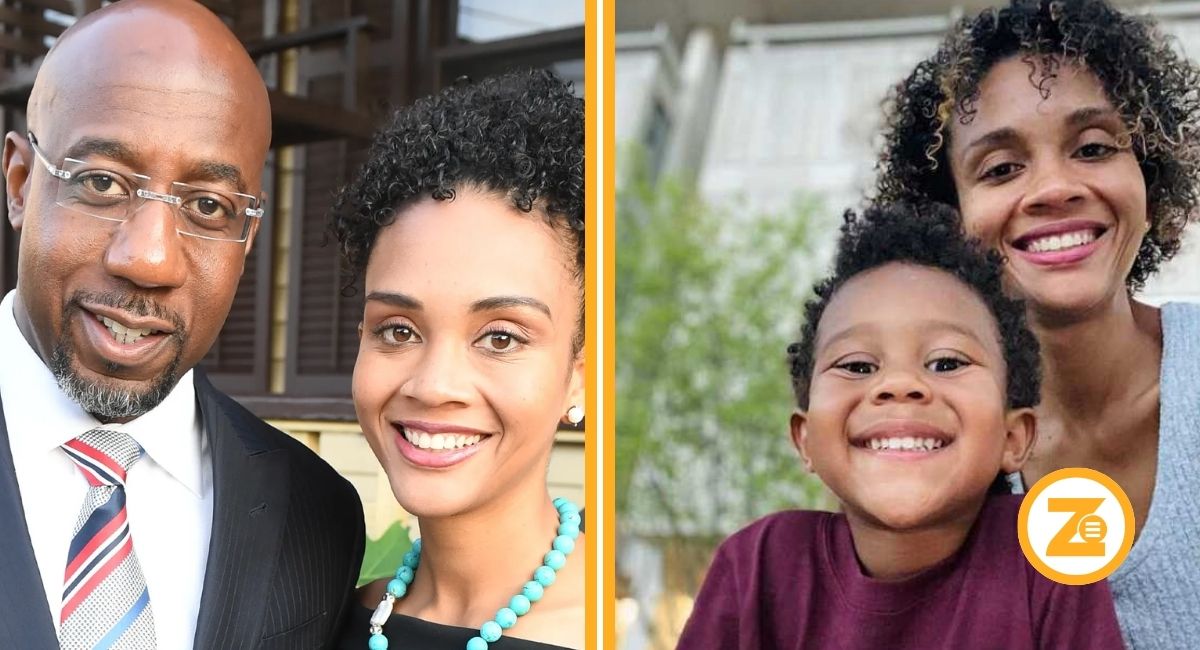
Many people first hear about Oulèye Ndoye through her former marriage to US Senator and pastor Raphael Warnock. That connection explains the public interest, but not the work she did before political attention reached her personal life. She studied at respected universities, served vulnerable communities in several countries, taught students, and helped shape policy against human trafficking. Her path later led to public health studies at Harvard. This article follows the verified parts of her life, from education and international service to motherhood, marriage, and divorce, without repeating unsupported celebrity claims.
Oulèye Ndoye Biography and Personal Details
| Full name | Oulèye Ndoye |
| Nationality | American |
| Raised in | Upstate New York, United States |
| Known for | Human rights, migration, public health, and anti-trafficking work |
| Undergraduate education | Spelman College, BA in International Studies |
| Graduate education | University of Oxford and Columbia University |
| Further study | Doctor of Public Health studies at Harvard T.H. Chan School of Public Health |
| Academic honour | Graduated summa cum laude from Spelman |
| International experience | Egypt, Israel, Senegal, and Thailand |
| Atlanta position | The city’s first Senior Human Trafficking Fellow |
| Former husband | Raphael Warnock |
| Marriage year | 2016 |
| Separation | November 2019 |
| Divorce finalised | 2020 |
| Children | Two |
| Date of birth | Not confirmed by a strong public source |
Early Life and Family Roots
Oulèye Ndoye was born and raised in upstate New York, according to her Harvard public service profile. Reliable biographies give few details about her childhood. Some entertainment websites list a birthday, parents, height, and estimated wealth, but primary records do not clearly support those claims. Repeated online details should not be presented as facts without sound evidence.
Her later life developed across cultures and countries. Study and work took her through Africa, Asia, Europe, the Middle East, and the United States. This experience gave her a closer view of migration, poverty, education, safety, and pressures faced by women and children. Those themes remained connected throughout her academic and professional life.
How Education Shaped Oulèye Ndoye
She began her higher education at Spelman College in Atlanta, where she earned a bachelor’s degree in International Studies. Harvard states that she graduated summa cum laude, an honour given for excellent academic work. Spelman is a historically Black college for women with a strong tradition of leadership and public service. Studying international issues there gave her a useful base for understanding how history, culture, government, and social conditions can affect people’s lives.
Her education continued at the University of Oxford and Columbia University, where she earned master’s degrees. A profile from the Weidenfeld-Hoffmann Trust identifies her Oxford programme as Migration Studies. This subject examines why people move, what happens when they cross borders, and how laws and economic forces shape their choices. She later taught history at Spelman College. Returning as a professor allowed her to turn international study and field experience into lessons for a new group of students.
International Experience Built a Wider View
Oulèye Ndoye gained experience in different parts of the world through study, fellowships, and service. She received a Critical Language Scholarship from the US Department of State to study in Cairo, Egypt. Through the Institute for International Public Policy Fellowship, she also worked with African asylum seekers in Tel Aviv, Israel. These experiences placed her close to people dealing with migration systems rather than limiting her understanding to books and classroom discussion.
She also helped administer a USAID grant for the 10,000 Girls project through the Women’s Health Education and Prevention Strategies Alliance in rural Senegal. Programme work of this kind requires planning, local knowledge, and respect for the people being served. Her role added another part to her growing career: she was learning how public funding, education, and community organisations can work together to support girls and improve long-term opportunities.
How Oulèye Ndoye Entered Anti-Trafficking Work
One of the most important stages of her early career came through the Luce Scholars programme. She spent more than a year in Southeast Asia and worked at a child protection centre in Chiang Rai, Thailand. The centre supported young survivors of sex trafficking. Working near children who had faced exploitation made the issue real and immediate. It also showed that recovery involves safety, trust, education, health care, and a stable path towards independent life.
She later explained that keeping children in school and helping them gain useful job skills can reduce the risk of trafficking. She also stressed that a programme must understand the culture of the community it hopes to help. An idea that works in one place may fail in another if local needs are ignored. This practical lesson became a key part of her approach: strong policy matters, but it must be informed by people and conditions on the ground.
Building Atlanta’s Response to Human Trafficking
In May 2018, Oulèye Ndoye was appointed as Atlanta’s first Senior Human Trafficking Fellow by Mayor Keisha Lance Bottoms. The position was part of the mayor’s executive team. Her task was to review existing efforts, find gaps, and develop a citywide policy plan. The role covered both sex trafficking and labour trafficking, which often receives less public attention. It brought her international experience into local government at a time when Atlanta was expanding its response to exploitation.
Her work called for cooperation among city departments, police, service providers, businesses, schools, faith groups, and community organisations. Atlanta held its first Human Trafficking Policy Roundtable in October 2018, giving these groups a place to discuss prevention and survivor support. She later advised the Georgia Criminal Justice Coordinating Council on responses to agricultural labour trafficking and guidance for law enforcement training. These roles show a move from direct service towards wider systems and policy.
Why Oulèye Ndoye Moved Into Public Health
Her interest in public health was a natural extension of her human rights work. Harvard has identified her as a Doctor of Public Health candidate at the T.H. Chan School of Public Health. Trafficking, migration, maternal health, and poverty are not only legal or social issues. They can also shape physical health, mental well-being, access to care, and the safety of whole families. Public health study offers tools for examining these links and testing which responses produce better results.
In 2024, she received a Harvard Presidential Public Service Fellowship connected to the Office of National AIDS Policy in Washington, DC. Harvard also notes her research through the Maternal Health Leadership Lab and lists her as a term member of the Council on Foreign Relations. During her doctoral studies, a media course taught her how researchers can speak clearly with reporters and explain developing evidence without acting as if every question already has a final answer.
Service, Motherhood, and Community Leadership
Her public service has also included work with nonprofit boards. She served on the boards of Wellspring Living and Motherhood Beyond Bars. Wellspring Living supports people affected by sexual exploitation and trafficking. Motherhood Beyond Bars works with pregnant women in prison and their babies in Georgia. Both organisations connect with subjects seen across her career: personal safety, health, dignity, motherhood, and support for people whose needs can be missed by larger systems.
Oulèye Ndoye has described being the mother of two children as her greatest accomplishment. That statement offers a rare personal detail in a profile mainly focused on study and public work. She has not built a public brand around her children, and much of their daily life remains private. This choice deserves respect. It is possible to understand the importance of motherhood in her story without publishing unnecessary details about children who did not choose public attention.
Marriage to Raphael Warnock and Public Attention
Oulèye Ndoye married Raphael Warnock in 2016. The couple first held a private ceremony in January, followed by a public wedding at Ebenezer Baptist Church on 14 February. Warnock was already the senior pastor of the historic Atlanta church. He later became a US senator for Georgia, which greatly increased national interest in his background and family. By the time they married, however, she had already completed major studies and gained international experience in human rights work.
The couple had two children and separated in November 2019. Their divorce was finalised in 2020. These dates matter because they correct a common impression that her professional identity came from her former husband’s political position. His successful Senate campaign increased the attention placed on their private history, but it did not create her education or career. Her work in migration, teaching, trafficking prevention, and city government had its own record before that campaign reached a national audience.
The Divorce and Later Court Attention
One disagreement during the divorce process became national news. In March 2020, she alleged that Warnock drove over her foot as he left after an argument about their children. He denied doing so. The responding officer reported seeing no signs that her foot had been run over, medical workers found no visible injury, and Warnock was not charged. These facts are important because political commentary later repeated the allegation without always giving the result of the police response.
Further court reporting appeared in 2022 when she sought changes to their child custody agreement while completing a programme at Harvard. Some details from family court filings became part of political news, but a court dispute gives only a narrow view of a family. It is fair to report what reliable records show, yet it is also important not to turn claims from either side into proven facts. Their children’s privacy should remain more important than public curiosity.
Conclusion
Oulèye Ndoye built her public service career step by step, moving from international studies into migration work, education, anti-trafficking policy, and public health. Her marriage to Raphael Warnock later brought wider attention, but her professional foundation was already in place. The most reliable picture is not based on rumours about her age, wealth, or private family life. It comes from her education at Spelman, Oxford, Columbia, and Harvard, her work with vulnerable communities, and her effort to improve public systems. Her biography therefore deserves to be read as the story of a mother, scholar, advocate, and policy professional, not only as the story of Raphael Warnock’s ex-wife.
(FAQ’s)
1. Who is Raphael Warnock’s former wife?
She is an American human rights and public health professional with experience in government, nonprofit organisations, teaching, and international service.
2. What does she do professionally?
Her work has focused on human rights, migration, human trafficking, maternal health, public policy, and public health research.
3. Where did she study?
She studied at Spelman College, the University of Oxford, Columbia University, and the Harvard T.H. Chan School of Public Health.
4. When did she marry and divorce Raphael Warnock?
They married in 2016, separated in November 2019, and completed their divorce in 2020.
5. How many children do they have?
They have two children together. Their personal details should remain private because they are not public figures.
You may also read: Who Is Asake Bomani? Exploring the Writing Career and Family Life of Danny Glover’s Ex-Wife
Visit for more additional information: Zellow Magazine