

An unfamiliar word can stop you in the middle of a sentence. It may look old, sound important, and still leave you unsure what the writer meant. Incfidelibus is a good example. Its spelling looks close to Latin, but one extra letter makes the meaning harder to confirm. The most useful starting point is the recognised Latin form infidelibus, without the “c”. Understanding that difference helps you judge online definitions, read an old passage more carefully, and avoid repeating a doubtful explanation. Here is what the language references support and how to check the spelling for yourself.
What Does Incfidelibus Mean?
No separate, standard Latin definition for Incfidelibus was confirmed in the references checked for this article. The closest recognised form is infidelibus, which comes from the Latin adjective infidelis. This makes a spelling or copying mistake a possible explanation. However, it does not prove where the extra letter first appeared. The careful answer is that the unusual spelling needs context before anyone can give it a clear meaning.
You may find a page that gives the term a confident definition without showing its source. Before accepting it, check which spelling the explanation actually describes. A page might discuss the real Latin word and then apply that meaning to the version with an extra “c”. Those are different claims. Evidence for one form does not automatically establish the other. Keeping the two spellings separate is the first step towards understanding the topic.
The Latin Roots Behind the Similar Spelling
The related Latin words belong to a group connected with trust and faith. Fides can refer to trust, confidence, or belief. Fidelis describes someone or something that can be trusted. Lewis and Short’s Latin dictionary records these meanings and gives examples from Latin writing. These words provide a useful starting point because their forms and meanings can be checked in established references. They also show why discussions of the unusual spelling often mention loyalty.
Infidelis carries the opposite sense. It can describe something unreliable or someone unfaithful. In Christian Latin, it can also mean unbelieving. Infidelibus is a grammatical form of this adjective. These meanings belong to the documented Latin word, and the best English choice depends on the passage. For example, a text about trust may need different wording from a text about religious belief. A single English definition cannot cover every possible use equally well.
Why One Extra Letter Matters
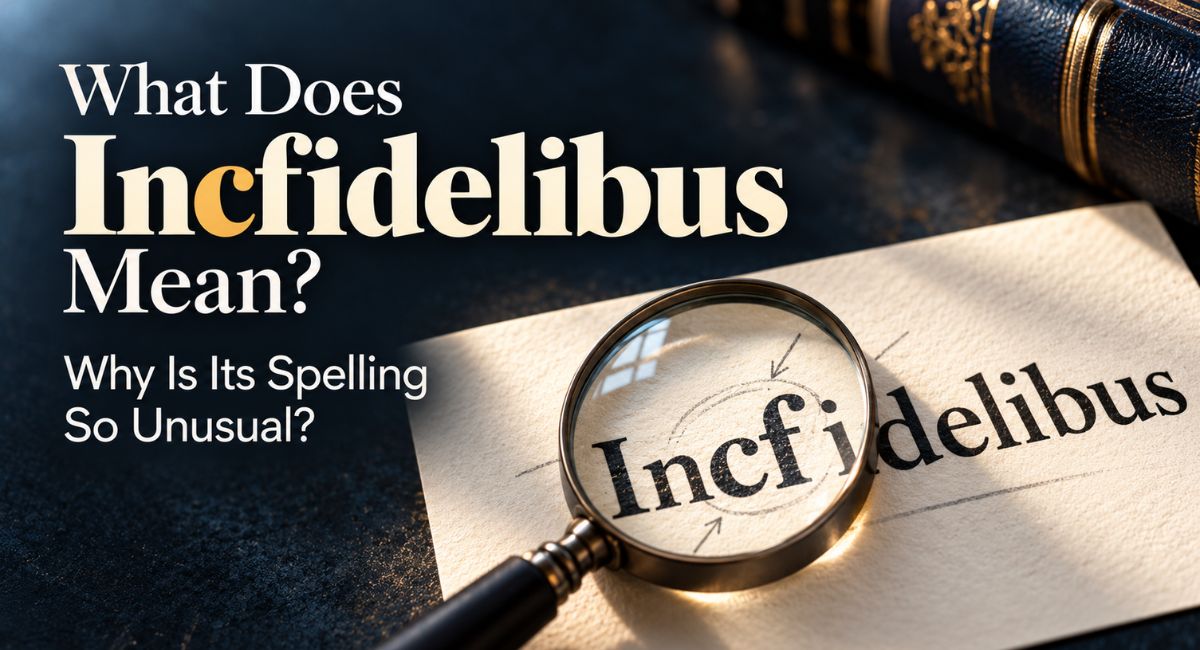
Place Incfidelibus beside infidelibus and compare them slowly. The first spelling includes a “c” after “in”, while the recognised Latin form does not. That small addition is the main reason the word needs checking. In an unfamiliar language, it is easy to overlook a single letter, especially when both versions look believable. A reader may understand the intended reference while still needing to correct or explain the written form.
It would be a mistake to give the extra letter a special meaning without evidence. The checked references do not establish it as part of this Latin form. At the same time, an unusual spelling is not automatically meaningless in every setting. It could be a chosen name or a deliberate change made by a modern writer. The useful question is whether the writer intended standard Latin, a personal name, or something else.
What the Ending “Ibus” Tells You
Latin often changes word endings to show how words work in a sentence. Infidelibus is a plural form used in two grammatical cases, called the dative and the ablative. In simple terms, these cases help express relationships such as “to”, “for”, “with”, or “by”. The right translation depends on the surrounding words. The ending therefore does more than make the word look Latin. It helps explain its role in a passage.
You do not need to learn a full grammar chart to understand the basic point. Think of the ending as a clue that needs other clues beside it. It cannot tell you the whole message alone. A dictionary may list the basic adjective infidelis rather than every form found in a book. If your first search gives no result, looking up that basic form can help you find the meaning and then check the ending.
Why the Full Sentence Changes the Translation
A real example appears in the Vatican’s Nova Vulgata text of 2 Corinthians 6:14. It contains the phrase “cum infidelibus”, which can be translated as “with unbelievers”. The nearby word cum helps show the relationship, while the religious passage helps explain which meaning fits. This example supports the recognised spelling without the extra “c”. It does not provide evidence that the altered version was an original Latin word.
If you are trying to understand a passage, copy the complete sentence rather than the unfamiliar word alone. Include the sentence before it if the subject is unclear. Then check who is being described and what the writer is discussing. A passage about religious belief, a discussion of trust, and a modern username each require different reading choices. This simple habit helps you avoid using an English meaning that sounds reasonable but does not fit the text.
Does the Word Always Refer to Cheating?
It is easy to connect the idea of being unfaithful with cheating in a relationship. However, that is too narrow as a general explanation of the related Latin adjective. The dictionary meanings also concern reliability and belief. A writer could be discussing broken trust without referring to romance at all. In a religious passage, the subject may be belief rather than personal loyalty. The topic of the sentence should guide the translation.
For a simple English comparison, think about the word “faithful”. A faithful friend may keep promises. A faithful copy may match its original closely. The meaning changes with the thing being described. This example shows why choosing one modern meaning too quickly can cause confusion. When reading Latin, avoid adding a relationship story that the passage does not contain. Translate what the writer says, rather than what a familiar English word first brings to mind.
How Could the Unusual Spelling Have Appeared?
Several explanations are possible, but none should be presented as a confirmed origin without a source. Someone may have added a letter while typing. A person copying a difficult passage may have misread it. A modern user may also have changed the spelling on purpose to make a distinctive name. These possibilities help frame the question, but they do not tell us which event actually produced the version seen on a particular page.
To investigate an origin, start with a dated example that you can inspect. Record the author, publication date, and place where the term appears. Then look for earlier examples and compare the surrounding text. If several pages repeat the same explanation, check whether they all depend on one source. Repeated wording can show that a claim has spread, but it cannot establish the first use. An origin needs a traceable record, not just a convincing story.
What to Check in an Old Scanned Text
Scanned books can contain two different versions of a passage. One is the visible image of the printed page. The other is text produced by optical character recognition, often called OCR. This software tries to turn letters in an image into searchable text. The Library of Congress explains that faded print and unclear marks can cause recognition errors. That makes OCR a possible source of spelling problems, though it does not prove the origin of Incfidelibus.
If you find the spelling in a digital book, open the page image and zoom in. Compare the visible letters with the text you copied from the search result. Look for a mark, damaged letter, or neighbouring character that might explain the difference. Save the page number so someone else can check it too. If the image shows infidelibus but the searchable text includes a “c”, you have identified a problem in that digital copy.
How to Find a More Reliable Definition
When researching Incfidelibus, keep your first search separate from your search for infidelibus. Search the exact spelling, then try the recognised Latin form and its basic adjective, infidelis. This gives you a way to compare claims rather than treating every result as the same answer. Prefer references that name their dictionary, explain the grammar, or show an original passage. A clear route back to the evidence matters more than a confident headline.
Suppose one article says the term names an ancient idea, while another gives a Latin explanation. Ask what each page provides to support its claim. A book title, page number, quoted passage, or named dictionary gives you something to check. A statement with no supporting detail leaves the question open. You do not have to accept the first answer you find. Keep a short note of what is confirmed and what still needs a source.
Could It Be Used as a Modern Name?
A person could choose Incfidelibus as a username, project title, or invented name. In that setting, its purpose would depend on the person using it. A chosen name does not have to follow the rules of an old language. However, using a Latin-looking spelling does not make it an established Latin term. If you meet it on a profile or website, look for the owner’s explanation before giving it a historical meaning.
For example, imagine someone uses the spelling for a personal art project. The letters might have been selected because the name looks distinctive. That would tell you about a modern choice, not the word’s ancient history. If you are considering the name yourself, explain what you intend it to represent. Avoid claiming a traditional translation unless you have checked it. Clear wording helps readers understand your idea without confusing creative use with documented language.
How to Explain the Spelling in Your Own Writing
If you are writing about Incfidelibus, introduce the uncertainty near the start. You could explain that the spelling resembles infidelibus, a recognised Latin form, while its extra letter has no confirmed explanation in the sources you checked. This gives readers a useful answer without claiming more than the evidence supports. Keep the original spelling when discussing the search term, and use the recognised spelling when explaining the Latin grammar or quoting a source.
If you are quoting a document, check whether you are copying the page image or its digital text. Do not quietly change an uncertain word and then present the result as an exact quotation. You can explain that the printed page and searchable text differ, or say that a spelling needs further checking. For a school assignment or public article, keep your source details. Another reader should be able to follow your explanation and inspect the same passage.
Conclusion
Incfidelibus is best approached as an uncertain spelling whose meaning depends on where it appears. The closest recognised Latin form is infidelibus, related to ideas of trust, faithfulness, and belief through infidelis. The extra “c” may result from an error or a deliberate change, but its origin should not be stated as fact without evidence. Check the full sentence, compare the spelling with a reliable reference, and inspect the page image when using a scanned text. These steps give you a clearer answer without turning a small spelling difference into an unsupported story.
(FAQ’s)
1. What does Incfidelibus mean?
No separate standard Latin definition was confirmed in the references checked; it closely resembles infidelibus.
2. Is it the same as infidelibus?
The spellings differ by one letter, and infidelibus is the recognised Latin form.
3. Why does the spelling contain an extra “c”?
Its origin is unconfirmed; a typing error, copying mistake, or deliberate change is possible.
4. Does the related Latin word always mean romantic cheating?
No, its meaning can concern reliability, faithfulness, or religious belief, depending on the passage.
5. How can I check the spelling in an old book?
Compare the searchable text with the page image, then check the full sentence and a Latin reference.
You may also read: How to Use Uncuymaza to Find Articles That Match Your Interests
Visit for more additional information: Zellow Magazine