

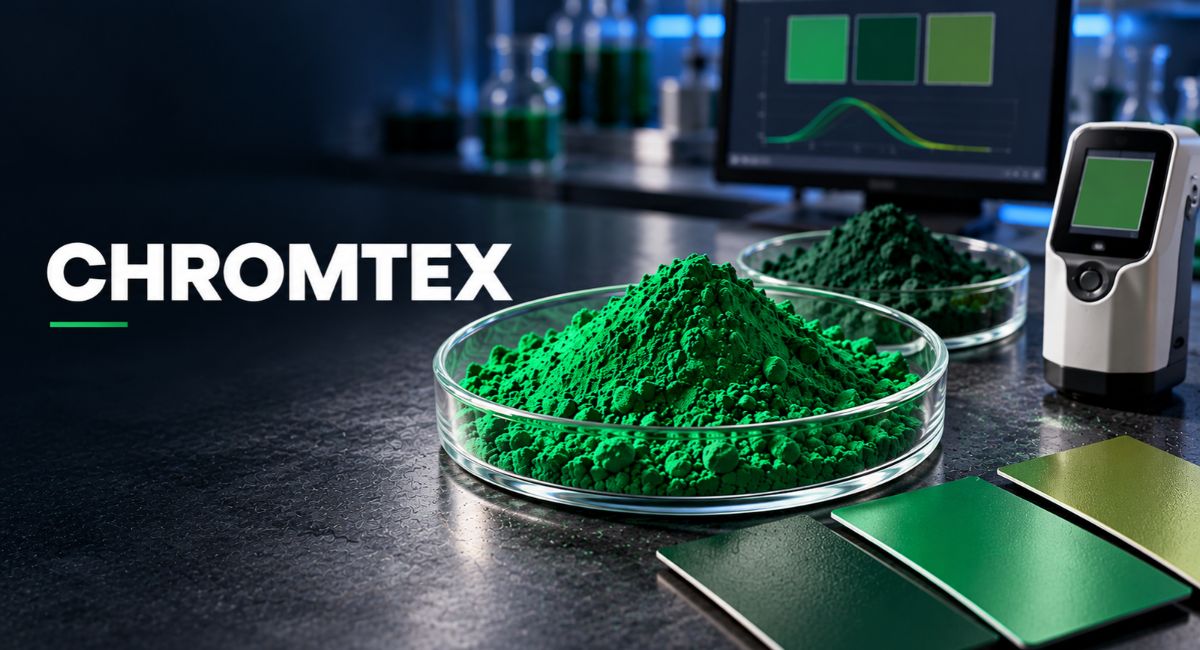
Two green pigment samples can look almost the same in their bags but give different results in a finished product. One may produce the shade you need with less material. Another may take more mixing time or leave visible marks. When comparing Chromtex with other green pigments, the useful question is how each option performs in your own formula. This guide explains the features worth checking, what common product terms mean, and how to compare samples before placing a larger order.
What Chromtex Is and Why the Grade Matters
The product range consists of synthetic chrome oxide green pigments offered by ZWUKSO. The main coloring compound is chromium(III) oxide, also written as Cr2O3. These are industrial pigments used to add green color to materials such as paints, plastics, concrete products, and rubber. The range includes several product grades. A grade is a specific version of the material, identified by its full product code. That code matters when requesting samples, reading documents, or repeating an order.
A pigment provides color as part of a larger mixture. It does not replace the other ingredients that make paint stick, plastic hold its shape, or concrete develop strength. Before comparing products, write down what you are making and the result you need. A pale green wall coating and a dark green paving block have different requirements. Starting with a clear purpose makes it easier to judge whether a particular grade deserves a trial.
Green Shade and Undertone
The word green covers many different shades. A sample may look slightly yellow, blue, dark, or dull beside another green. These smaller color differences are often called undertones. When testing Chromtex, compare the finished sample with an agreed color reference. Avoid choosing from a photograph alone, since lighting, camera settings, and screen displays can change how a shade appears. A physical sample gives you a much clearer starting point for discussion with a supplier.
Use the same lighting and background when checking competing samples. Also compare them after the normal drying or curing period for your material. For a practical example, imagine a customer asking for replacement paving blocks that match an older order. A green that looks close in wet concrete may still need adjustment after curing. Keep an approved finished sample, label it clearly, and use it as the reference for future checks rather than relying on memory.
Color Strength and the Amount You Need
Color strength, sometimes called tinting strength, describes how strongly a pigment affects the color of a mixture under defined test conditions. It helps buyers compare how much material is needed to reach a target shade. When reviewing Chromtex, ask how any strength value was measured and which reference product was used. A number on one product sheet may not be directly comparable with a number on another sheet if the tests were different.
Begin by comparing equal pigment amounts in otherwise matching formulas. Then, if needed, adjust each amount to reach the same target color and record the result. These two checks answer different questions. The first shows how products behave at the same loading. The second helps reveal the cost of achieving your chosen shade. Do not assume that the strongest sample is automatically the best choice, since mixing time, surface appearance, and repeatability also matter.
Hiding Power and Surface Coverage
Hiding power means how well a coating covers the color or contrast of the surface beneath it. It is also known as opacity. This matters when a green paint must cover an uneven background or an earlier coating. Color strength and hiding power describe different things, so a strong green shade does not prove that the finished paint will cover well. The complete paint formula and the applied film thickness both affect the result.
For a useful comparison, apply competing paint samples over matching black and white test cards at the same film thickness. Allow them to dry under the same conditions before judging the contrast that remains visible. If one sample looks better, check whether it was applied more thickly before giving it a higher score. Keep coverage testing separate from simple shade matching. This helps prevent a dark or strongly colored sample from receiving an unfair advantage.
Particle Size and Ease of Mixing
Pigment particles need to spread evenly through the material they color. This process is called dispersion. Fine powder can still contain groups of particles that need to be separated during processing. Poor dispersion can cause color differences, uneven appearance, or other coating defects. When comparing Chromtex, look beyond a description such as finely milled. Ask whether the grade can be dispersed well using the equipment, mixing conditions, and ingredients available in your production process.
Record how long each sample takes to reach an acceptable result. For liquid coatings, also check for visible specks, changes in flow, and settling during a suitable storage trial. Do not change the mixer speed for one sample and then treat the result as an equal comparison. If a supplier recommends different processing conditions, run that as a separate trial. This shows both the performance under common conditions and the possible benefit of changing your process.
Fit With Your Paint, Plastic, or Concrete
A product described as suitable for an industry still needs to work in your specific formula. For paints, the binder is the ingredient that helps form the coating film. For plastics, the type of plastic and processing conditions need attention. Concrete introduces another set of ingredients and production steps. When considering Chromtex for any of these uses, ask for guidance that matches your actual material rather than accepting a broad statement about industrial coloring.
Concrete provides a useful example. Cement and aggregates can influence the final shade, so a pigment sample tested in one mix does not guarantee the same appearance in another. Use your normal raw materials when making comparison samples. Keep the water amount, mixing method, and curing conditions consistent so the test remains useful. For a paint or plastic trial, follow the same principle: compare the pigments inside a realistic formula that represents the product you intend to sell.
Heat, Light, and Weather Performance
The conditions a finished product will face should guide your testing. A plastic part may face heat during production. An outdoor coating may need to keep its appearance through sunlight and weather exposure. Ask for grade-specific performance information when assessing Chromtex. A general claim such as durable green pigment does not tell you the temperature, exposure time, or test conditions involved. Those details help you decide whether the evidence is relevant to your project.
Keep pigment performance separate from the performance of the finished material. Even if a colorant remains stable, other ingredients may change during processing or outdoor use. Ask how the complete product should be tested for its intended conditions. A short trial can help identify an obvious problem, but it cannot establish years of outdoor performance. Agree on a suitable test plan before making a long-term claim to customers or committing to a demanding application.
Consistency Between Production Batches
A good first sample is useful, but repeat orders also need to meet your requirements. Small differences become especially noticeable when products sit beside each other, such as tiles on a roof or panels on a wall. Ask which properties are controlled between batches and what variation the supplier accepts. A batch certificate can provide measured information for a particular delivery. Check what it actually reports rather than assuming that every important feature has been tested.
Keep a labeled reference sample from approved deliveries and record the matching batch numbers. If a later order produces a different result, these records make the discussion more useful. Compare the raw materials and production conditions as well as the pigment. For example, a changed cement supply or a different paint base should be investigated before blaming the colorant. The aim is to find the cause of variation and keep the finished color within an agreed range.
Product Documents and Handling Details
Before ordering Chromtex, request the current Technical Data Sheet and Safety Data Sheet for the exact grade. The technical sheet describes product properties and may include test values or suggested applications. The safety sheet covers handling, storage, and other product-specific precautions. Check the product code and document date on both. Documents for a similar name or a different grade may leave important questions unanswered, even when the descriptions appear close at first glance.
Ask the supplier to explain unclear terms before the material enters production. Follow the handling and storage instructions for the supplied product, including any dust-control measures required by the safety sheet. Also separate color claims from environmental claims. Green describes a shade; it does not establish a lower environmental impact. If environmental performance is part of your buying decision, request evidence that explains the claim and shows which product, process, or measurement it covers.
Cost Per Finished Product
The price per kilogram is only one part of the comparison. Pigment use, mixing time, rejected output, delivery charges, and order size can all influence the final cost. When comparing Chromtex with another option, calculate the pigment cost for a batch that meets the same requirements. Otherwise, a cheaper powder may appear attractive simply because the comparison ignores how much is needed or whether the finished result reaches your target color.
Consider a fictional example. Pigment A costs $6 per kilogram and requires 4 kilograms for an approved batch, giving a pigment cost of $24. Pigment B costs $5 per kilogram but requires 5 kilograms, giving a cost of $25. These figures are only an example, not current market prices or product claims. They show why the lower price per kilogram may not give the lower batch cost. Add processing costs only after confirming that both options meet the same quality needs.
A Fair Sample Test Before You Order
Build a simple trial around the decisions you need to make. Choose a target shade, an acceptable surface appearance, and a realistic processing time. Then test Chromtex and the other candidate pigments using clearly recorded conditions. Label every sample with its product code, pigment amount, base formula, and production date. Use the same measuring equipment and an agreed method. Clear records are more useful than a general note saying that one sample looked better.
After the first trial, repeat the most promising option to see whether you can reproduce the result. If it works well, check it at a suitable larger scale before approving a major order. Small samples may not reveal every issue that appears during normal production. Discuss any required formula or equipment changes with the supplier and record them. The final decision should bring together appearance, processing, consistency, documentation, and cost, with each judged against the needs of your finished product.
Conclusion
Choosing Chromtex or another green pigment is easier when you compare clear features under matching conditions. Start with the exact grade, then examine shade, color strength, hiding power, dispersion, and fit with your formula. Check the documents and any performance claims against your intended use. Finally, compare the cost of producing an acceptable finished batch. A well-recorded sample trial gives you practical evidence for the decision and a useful reference when placing repeat orders.
(FAQ’s)
1. What is Chromtex used for?
It is a chrome oxide green pigment range used to color industrial materials, including paints, plastics, concrete products, and rubber.
2. Are all green pigment grades interchangeable?
No. Confirm the grade specifications and test each candidate in your own formula before replacing an approved product.
3. Is color strength the same as hiding power?
No. Color strength concerns the coloring effect, while hiding power concerns coverage of the background beneath a coating.
4. Can I choose a pigment from a screen image?
A screen image can help with an early search, but use finished physical samples for color approval.
5. What should I check before a bulk order?
Confirm the grade, review its documents, test samples, and agree on quality requirements and delivery terms.
You may also read: Tracqueur Feature Claims to Check Before Choosing a New Tracker
Visit for more additional information: Zellow Magazine